Vision
Clients
Mission
Illuminate the path to an inclusive and resilient low-carbon energy transition.
Utilities, governments, citizens groups, unions, foundations, business, advocacy organizations, ENGOs, elected officials, and Indigenous Nations and organizations.
Provide research, training, knowledge translation, information synthesis, and contextual insight to shape the implementation of low-carbon energy innovations, technology and infrastructures.


Professional research
Impact
Lived Experience
Education
Policy
Experience
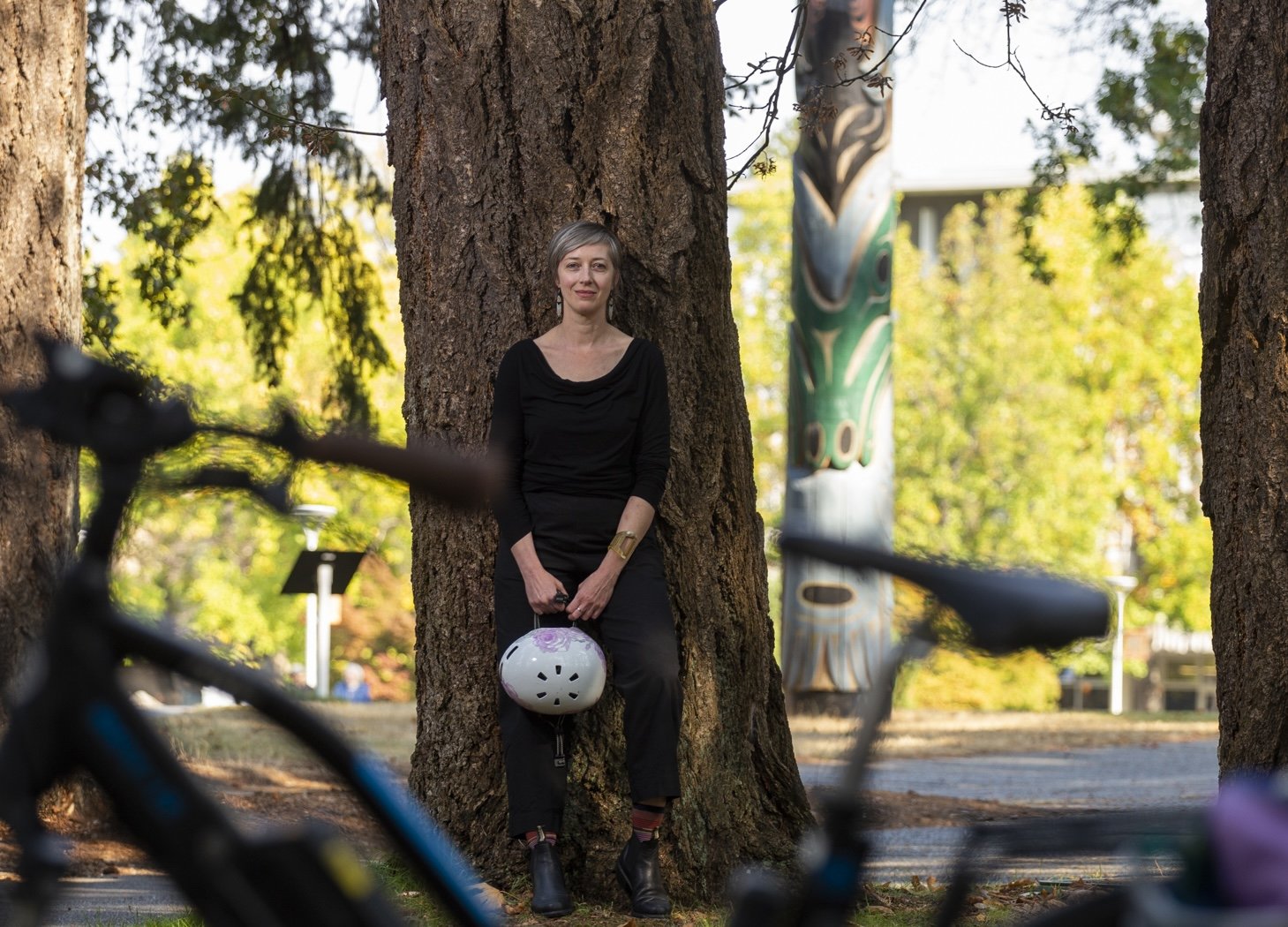
I have 20+ years experience leading innovative and award winning empirical research that is recognized for rigour and impact.
I have provided findings and customized training to foundations, utilities, industry and Indigenous interest and advocacy organizations, and in government. I have presented to Natural Resources Canada, the Legislative Assembly of the Northwest Territories, the federal government House of Commons Standing Committee on Natural Resources and Standing Committee on Environment and Sustainable Development, and the United Nations Development Program, among others.
My expertise is grounded in lived experience, formal training, hands-on policy experience, and professional work with Indigenous, racialized, neurodivergent, newcomer, francophone, gender-diverse, and 2SLGBTQIA+ communities.
I trained in systems thinking skills and knowledge of thermodynamic laws during my B.Eng in chemical engineering (McGill University). I studied ecological economics and the impacts of price design on resource consumption and conservation during a Master’s of Environmental studies (York University). I studied the diffusion of low-carbon innovations during my PhD in human and economic geography (University of Waterloo).
I worked on the coal cessation regulation for the province of Ontario (2007), the design, pause and review of the renewable energy standard offer program (RESOP) for the Ontario Power Authority (2006) and Government of Ontario (2008), and on demand side management for for the Association of Major Power Consumers in Ontario (AMPCO) (2006) and for a utility (2005-2006).
Expertise
Innovation and Infrastructures
Circe Energy distinguishes implementation processes by type of innovation, technology or infrastructure. These include renewable electricity, electricity grids and transmission lines, energy storage, nuclear, carbon capture, hydrogen, energy efficiency, coal phase-out, and clusters of low-carbon innovations.
Policy insight
Most low-carbon innovations struggle to obtain market share, and low-carbon infrastructures face social challenges. Circe Energy provides insight into how a range of factors such as policy & regulation, governance, interest holder involvement, market structures, workforce and contextual features can support or hinder implementation of low-carbon innovations and infrastructures across regions and sectors.
Contextualize
Workforce transition
Analysis
Communities - whether urban, rural, remote, large or small - have differing priorities, capacities, and assets for low-carbon innovations, technologies and infrastructures. Circe Energy supports strategies across contextual differences.
Circe Energy provides analysis to overcome limited diversity and shortages in the energy workforce that presents challenges for energy transitions.
Circe Energy employs document analysis, surveys, interviews, workshops, training, and media as methods to gather data, develop and disseminate insights.