
Services
Scope of analysis
When we try to identify pathways to inclusive and resilient low-carbon energy transitions, it can seem like there are an astounding range of factors that constrain and affect pathways (policy mixes, geography, infrastructures, workforce readiness), and limitations on the information we need. It can be hard to know where to start. Circe Energy can help you articulate questions, outline the scope of analysis, and design research strategies.
Portfolio
Public Briefing on the Committee Study of Northwest Territories Power Corporation(NTPC) Governance presented to the Legislative Assembly of the Northwest Territories (2025)
Why cities rely on regions in a renewable energy transition (The City Talks 2022)
Why we need place-based approaches to implement renewable energy (TISED McGill University)


Information baseline
When the information required to make decisions is unavailable, inaccessible, contradictory, or lacks synthesis, Circe Energy offers a range of qualitative methods to develop and validate baselines. We employ curated workshops, qualitative interviews, surveys, written feedback, and document analysis.
EMPOWERING COMMUNITIES: a landscape analysis of renewable electricity ownership, benefits and research gaps for the David Suzuki Foundation. (2025).
Filling the policy information gap of relevant impacts and benefits of First Nations led renewable energy projects for Clean Energy Association of BC and the New Relationship Trust.
A baseline of equity, diversity and inclusion activities across energy and environment organizations in Canada (McConnell Foundation), Philanthropic organisations advancing equity, diversity and inclusion in the net-zero carbon economy in Canada (2022)
Market Snapshot: Indigenous Ownership of Canadian Renewable Energy Projects is Growing (Canada Energy Regulator / Régie de l’énergie du Canada 2023)
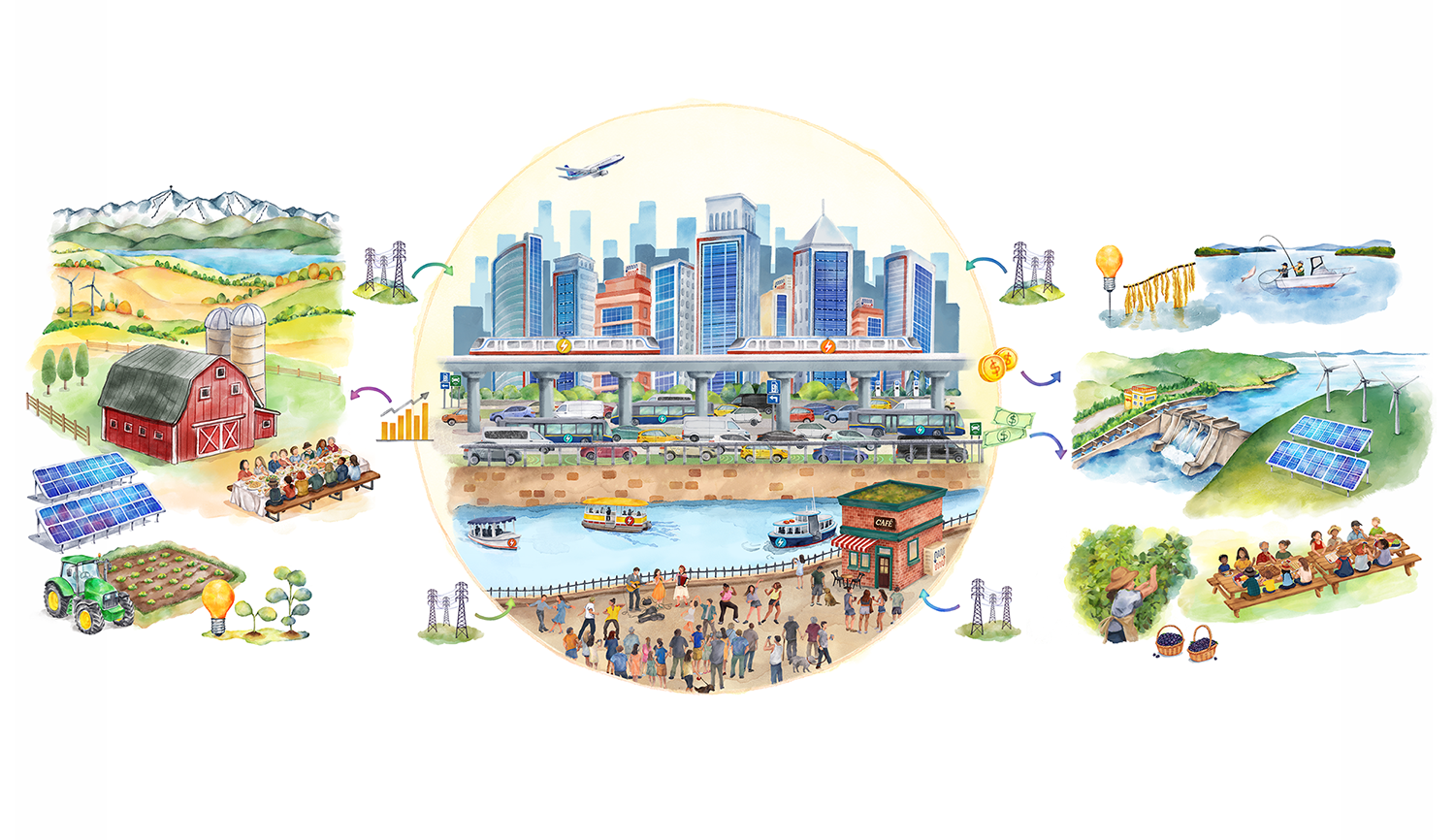
Illustration / Design by Saki Murotani © SAKIART
Shaping outcomes
Most low-carbon innovations struggle to obtain market share, and low-carbon infrastructures face social challenges. Circe Energy provides insight and analysis into how a range of factors such as policy & regulation, governance, interest holder involvement, market structures, anticipated and felt impacts, workforce diversity and transition, local and regional dynamics can shape outcomes contextual features can support or hinder pathways to inclusive and resilient low-carbon energy transitions across regions and sectors.
What cities need to know when pursuing renewable energy? (C40 Cities, 2022)
Motivations, regulatory changes, and designs for a First Nations Power Authority (The Conversation, 2025)
Innovation in renewable energy governance and ownership options (The Hill Times, 2024)
A framework of policy and planning instruments to scale citizen ownership of renewable electricity. (Figure 1, David Suzuki Foundation, 2025)
Why aren’t low-carbon innovations diffusing in Ontario? Influence of policy instruments and legitimacy(Corporate Knights 2021).
How to accelerate the implementation of renewable energy (Smart Prosperity Institute, 2022)
Clusters of low-carbon innovations to meet emissions targets. (Corporate Knights, 2021)
Structural Obstacles Limit Women’s Access to Clean Energy Jobs, Study Finds. (The Energy Mix, Trellis Fund, 2026)
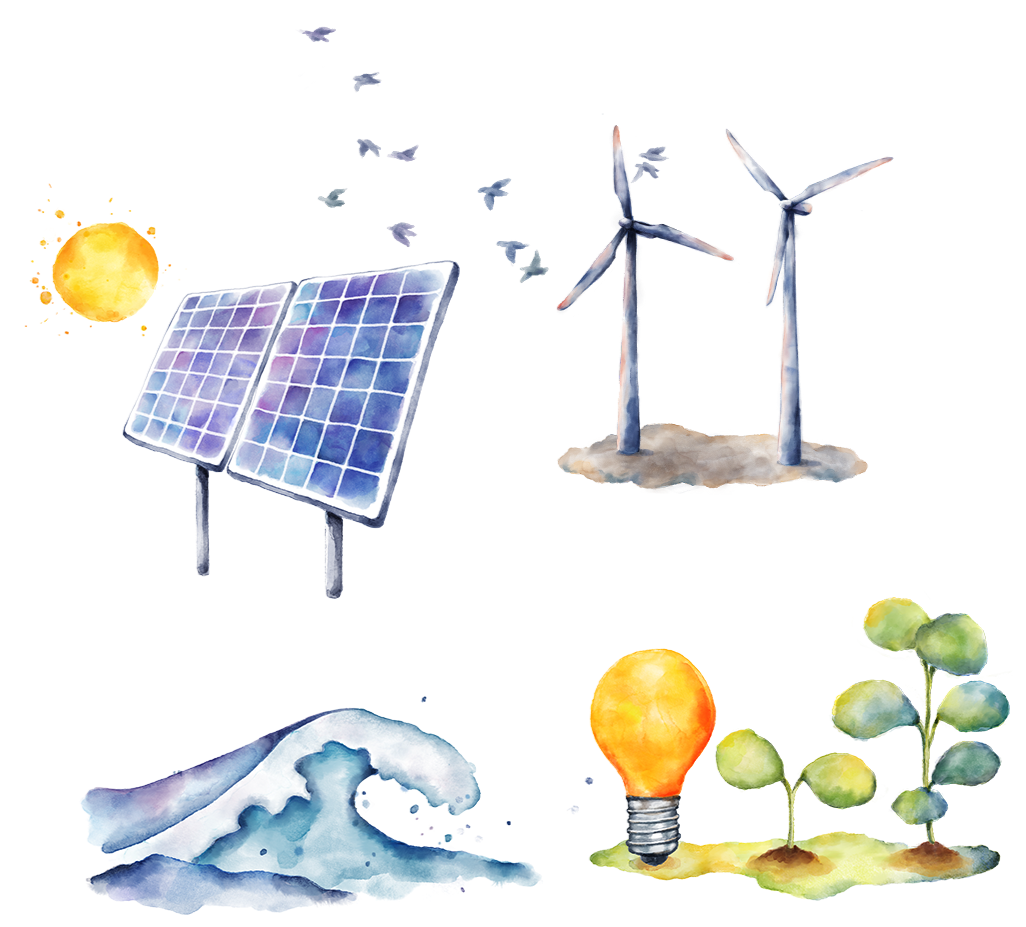
Illustration / Design by Saki Murotani © SAKIART
How innovation and infrastructures meet local context
Communities - whether urban, rural, remote, large or small - have differing priorities, capacities, and assets for low-carbon innovations, technologies and infrastructures. Circe Energy distinguishes implementation processes by type of innovation, technology or infrastructure. These include renewable electricity, electricity grids and transmission lines, energy storage, nuclear, carbon capture, hydrogen, energy efficiency, coal phase-out, and clusters of low-carbon innovations.
Media
“Pilbara's Indigenous leaders look to Canada as way to address economic disadvantage” (ABC News 2025).
Carbon Capture and Storage (The Transition Accelerator, 2023)
l’hydrogène vert à Prince George (French) CBC News.
Perspectives on nuclear power (The Hill Times, 2023)
Contextualizing electric vehicle implementation in British Columbia (CityNews, 2024)
Electric vehicles: one part of an energy transition to mitigate climate change" (The Hill Times, 2023)
Nuclear Fusion (CBC News)

Illustration / Design by Saki Murotani © SAKIART